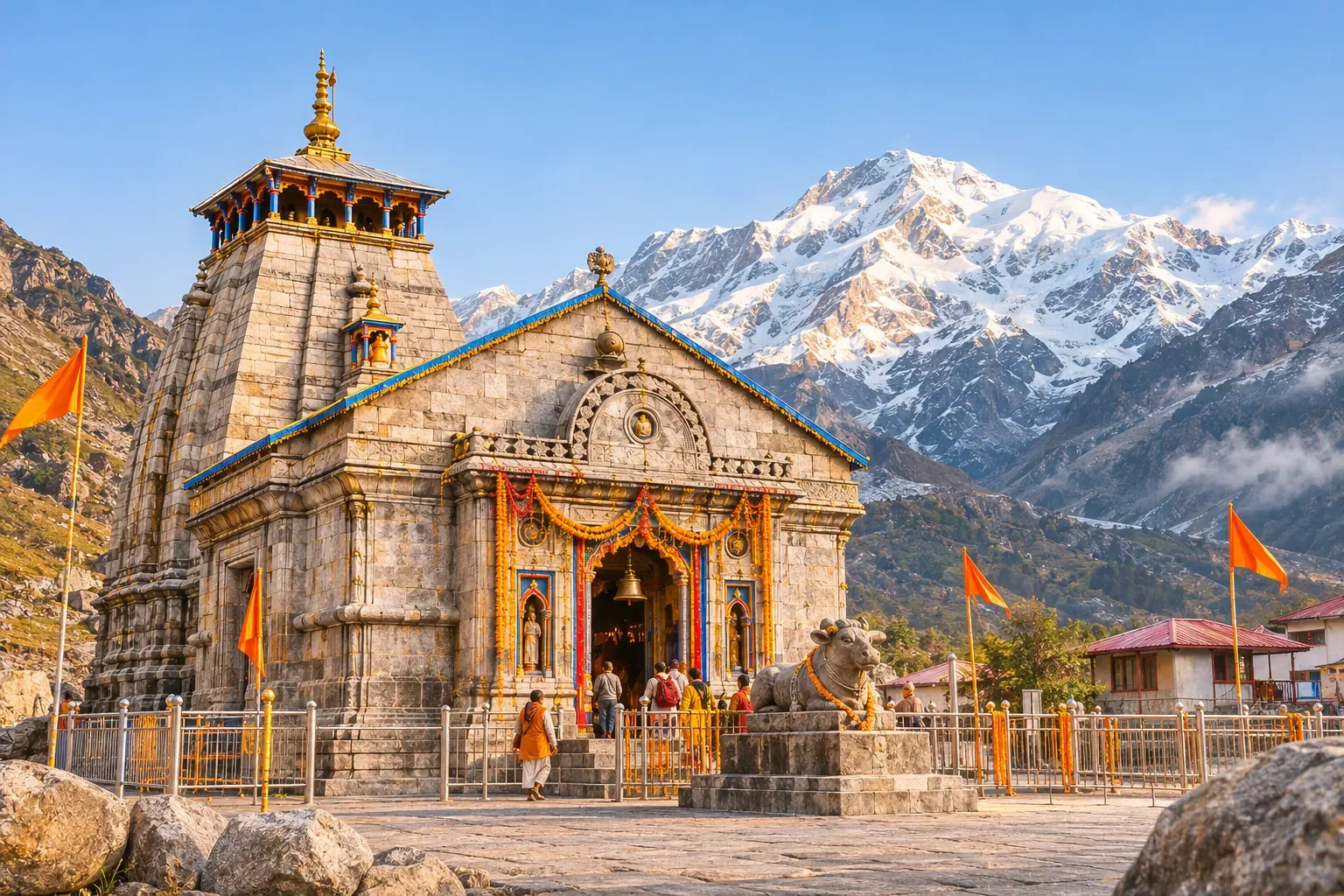
Char Dham yatra (A Deluxe yatra)
Haridwar to Haridwar
- 11 Nights / 12 Days
- 12-day plan
- Fixed departures
₹65,000
per person
Madurai Airport (IXM) to Chennai International Airport (MAA)
₹46,000
Double Sharing Occupancy (Per Person)
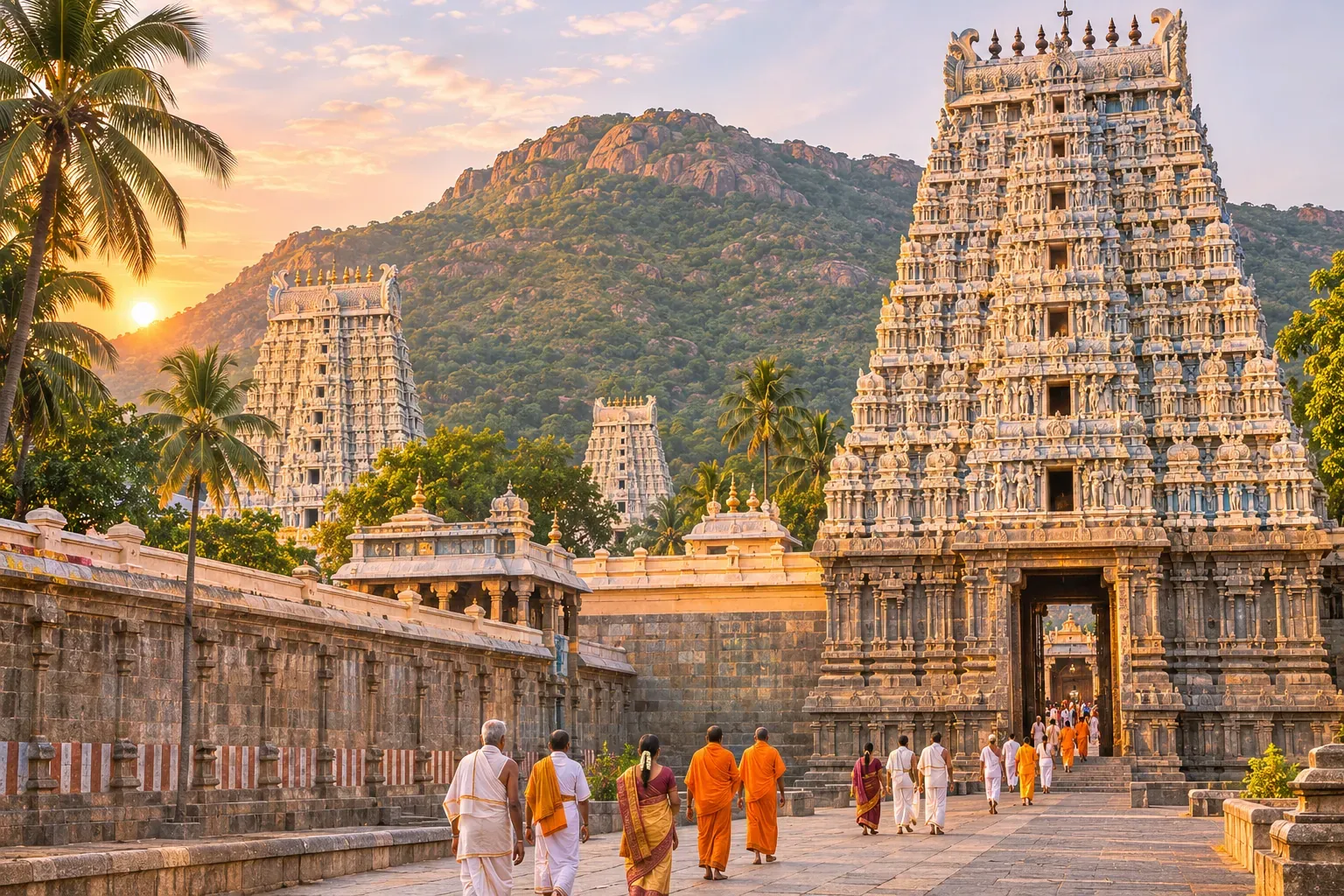
The sacred geography of Southern India preserves an ancient, interconnected network of pilgrimage sanctuaries that bridge classical Vedic metaphysics and temple traditions. At the core of this spiritual landscape lies the Pancha Bhoota Sthalam circuit—five historical shrines where Lord Shiva is worshipped as the embodiment of the five primordial elements of nature: Prithvi (Earth), Appu (Water), Agni (Fire), Vayu (Air), and Akasha (Space or Ether).
Rooted in Shaiva Siddhanta philosophy, the elemental shrines express the doctrine that the unmanifest supreme consciousness (Parashiva) permeates the material cosmos by systematically condensing into physical matter.
The foundational canon of these elemental shrines is preserved in the Thirumurai, the twelve-volume corpus of Tamil Shaiva devotional poetry composed between the 6th and 9th centuries CE by the Nayanmar saints: Thirunavukkarasar (Appar), Thirugnana Sambandar, Sundarar, and Manikkavasagar. Their Devaram hymns established these sacred centers as Paadal Petra Sthalams, sanctifying their spiritual importance.
Geographically distributed across Tamil Nadu and southern Andhra Pradesh, the Pancha Bhoota temples display a coordinated cosmological layout:
Integrating this Shaiva circuit with the Shakthi worship of Arulmigu Meenakshi Sundareswarar in Madurai and the Vaishnavite pinnacle of Sri Venkateswara Swamy in Tirumala creates a complete cross-sectarian pilgrimage.
The resulting 5-Night / 6-Day itinerary runs along an optimized south-to-north corridor from Madurai Airport (IXM) to Chennai International Airport (MAA). This route balances travel distances against the traditional opening and closing cycles of Dravidian temple complexes.
5-Night / 6-Day
08:00 – 10:30: Chauffeur reception at Madurai Airport (IXM). Guests are assisted with luggage and seated in their private air-conditioned vehicle (Toyota Innova Crysta or Force Urbania) for transit to the historic city center. 10:30 – 13:30: Entry into the Arulmigu Meenakshi Sundareswarar Temple. Devotees proceed through special access channels to receive darshan of Goddess Meenakshi, who holds a divine parrot and embodies supreme sovereign Shakthi, followed by worship at the shrine of Lord Sundareswarar (Soma Sundarar). 13:30 – 14:30: Traditional vegetarian lunch recess in Madurai (direct settlement by guests). 14:30 – 17:30: Highway transit from Madurai to Tiruchirappalli (Trichy) via the NH38 four-lane corridor (approx. 135 km; 2.5 to 3 hours). 17:30 – 20:00: Arrival at Thiruvanaikaval on the island of Srirangam to visit the Arulmigu Jambukeswarar Temple, the Appu Sthalam (Water Element). Devotees proceed into the inner prakaram to witness the natural spring that continuously covers the lingam's base. Access is coordinated through the entry passage into the compact Ardha Mandapam. A local pandit assists with the archana, sanctum viewing, and darshan of Goddess Akhilandeswari. 20:30 – 22:00: Check-in at the hotel in Tiruchirappalli. Dinner is served at the property's dining facility under the MAP Plan. Overnight stay in Trichy. Overnight Stay: Tiruchirappalli (Trichy). Boarding (MAP Plan): Dinner
06:30 – 07:30: Buffet breakfast at the hotel in Trichy, followed by check-out. 07:30 – 10:30: Road transit from Trichy to Chidambaram via the NH81 highway route (approx. 130 km; 3 hours). 10:30 – 14:00: Worship at the Thillai Nataraja Temple, the sacred Akasha Sthalam (Space Element). Devotees enter the Kanaka Sabha and the Chit Sabha, the golden-roofed inner sanctum where Lord Shiva performs the Ananda Tandava (Cosmic Dance of Bliss). Arrangements provide seated viewing in the hall for the midday Mahaabhishekam of the sacred Sphatika Lingam (Crystal Shiva) and the Ratnasabhapati (carved ruby icon). Devotees witness the Chidambara Rahasya Darshan, in which the removal of a velvet curtain reveals an empty space adorned only with a garland of golden Vilva leaves, signifying the formless void of Brahman. For guests requesting the on-demand Mahaabhishekam, the ritual is performed under their explicit family Sankalpam. 14:00 – 15:00: Vegetarian lunch break in Chidambaram town (direct settlement). 15:00 – 17:30: Coastal highway transit via the NH32 corridor to the Union Territory of Puducherry (approx. 65 km; 1.5 to 2 hours). 17:30 – 19:30: Hotel check-in in Pondicherry, followed by leisure time along the Promenade Beach or a walking tour of the French Quarter (White Town). 20:00 – 21:30: Dinner at the hotel restaurant under the MAP Plan. Overnight stay in Pondicherry. Overnight Stay: Puducherry. Boarding (MAP Plan): Breakfast, Dinner
06:00 – 07:00: Early breakfast at the Pondicherry hotel, followed by morning check-out. 07:00 – 09:30: Transit from Pondicherry to Tiruvannamalai across the plains via NH332 and NH77 (approx. 110 km; 2.5 hours). 09:30 – 13:00: Darshan at the Arulmigu Arunachaleswarar Temple, located at the base of Mount Arunachala as the Agni Sthalam (Fire Element). Entry is managed via the special queue line. Devotees walk through the monumental 217-foot Eastern Rajagopuram into the central sanctum. With assistance from local priests, devotees receive darshan of the Agni Lingam in the inner chamber, followed by worship at the shrine of Unnamalai Amman. Time is also allocated to visit the subterranean Patala Lingam vault, associated with Sri Ramana Maharshi's early penance. 13:00 – 14:00: Traditional South Indian vegetarian lunch in Tiruvannamalai (direct settlement). 14:00 – 17:30: Road transit from Tiruvannamalai to the temple city of Kanchipuram via Vandavasi (approx. 115 km; 3 hours). 17:30 – 20:30: Arrival in Kanchipuram. Devotees are accompanied to certified Silk Handloom Weavers' Cooperative Societies. Dedicated time is set aside to view traditional loom operations and purchase certified pure mulberry silk sarees with authentic gold and silver zari. 20:30 – 22:00: Hotel check-in in Kanchipuram, followed by dinner under the MAP Plan. Overnight stay in Kanchipuram. Overnight Stay: Kanchipuram. Boarding (MAP Plan): Breakfast, Dinner
06:30 – 07:30: Breakfast at the Kanchipuram hotel and check-out. 07:30 – 10:30: Morning worship at the Arulmigu Ekambareswarar Temple, the Prithvi Sthalam (Earth Element). Devotees participate in the morning darshan and witness the Prithvi Lingam Abhishekam. Because the lingam is formed of solidified sand, liquid libations are offered only to the surrounding brass base (Aavudaiyar), protecting the sacred earthen form. Devotees receive consecrated vastra and prasadam from the temple pandits. The visit concludes with circumambulation of the sacred 3,500-year-old Mango Tree (Sthala Vriksham), whose four major branches traditionally represent the Four Vedas. 10:30 – 11:30: Optional visit to the nearby Sri Kanchi Kamakshi Amman Temple, an important Shakthi Peetham housing the Sri Chakra consecrated by Adi Shankaracharya. 11:30 – 14:30: Interstate highway journey from Kanchipuram (Tamil Nadu) to Tirupati (Andhra Pradesh) via NH40 and NH716 (approx. 115 km; 3 hours). 14:30 – 16:00: Arrival and check-in at the hotel in Tirupati near the Tirumala foothills. 16:30 – 19:30: Late afternoon visit to the Sri Padmavathi Ammavari Temple at Tiruchanur to pay homage to the divine consort of Lord Venkateswara, following traditional pilgrimage protocol. 20:00 – 21:30: Dinner at the hotel restaurant under the MAP Plan. Overnight stay in Tirupati (Night 1 of 2 in Tirupati). Overnight Stay: Tirupati. Boarding (MAP Plan): Breakfast, Dinner
07:00 – 08:30: Breakfast at the hotel in Tirupati. 08:30 – 10:00: Scenic drive up the Tirumala Ghat Road in the private vehicle, ascending into the Seshachalam Hills (approx. 22 km; 45 to 60 minutes). 10:00 – 16:00: Pilgrimage worship at the Sri Venkateswara Swamy Temple atop Tirumala. Entry is coordinated through the Tirumala Tirupati Devasthanams (TTD) Protocol VIP Darshan / Special Entry Darshan channel (included in the package). Devotees move through the Vaikuntam Queue Complex into the inner sanctum beneath the golden Ananda Nilayam vimana. Devotees receive darshan of the Moolavirat Lord Srinivasa, adorned in traditional silk and jewels. Following darshan, devotees collect the consecrated Tirupati Laddu Prasadam and offer prayers at the Srivari Hundi and golden Dhwajastambham. 16:00 – 18:00: Exploration of adjacent sacred sites across the Tirumala plateau, including the Sri Bhu Varahaswamy Temple along the Swami Pushkarini holy tank and the natural rock formation at Silathoranam. 18:00 – 19:30: Vehicle descent via the Down Ghat Road back to the hotel in Tirupati. 20:00 – 21:30: Dinner at the hotel under the MAP Plan. Overnight stay in Tirupati (Night 2 of 2 in Tirupati). Overnight Stay: Tirupati. Boarding (MAP Plan): Breakfast, Dinner
06:00 – 07:00: Early morning breakfast at the hotel, followed by luggage loading and check-out. 07:00 – 08:00: Morning drive from Tirupati to Srikalahasti along the Swarnamukhi River basin (approx. 38 km; 45 to 60 minutes). 08:00 – 12:00: Entry into the Sri Srikalahasteeswara Temple, the venerated Vayu Sthalam (Air Element). Devotees observe the continuous flickering of the sanctum's ghee lamps within the unventilated, stone-enclosed Garbhagriha, demonstrating the dynamic presence of the wind element. Devotees then participate in the pre-scheduled Rahu-Ketu Sarpa Dosha Nivarana Pooja conducted in the temple's dedicated mandapams during the morning time slots to mitigate astrological and ancestral doshas. 12:00 – 13:00: Concluding temple blessings, prasadam collection, and preparation for departure. 13:00 – 16:30: Final highway transfer from Srikalahasti to Chennai International Airport (MAA) via NH716 and NH16 (approx. 125 km; 3.5 hours). 16:30 – 17:30: Drop-off at Chennai International Airport Departures Terminal for outbound flights, concluding the pilgrimage circuit. Overnight Stay: Departure. Boarding (MAP Plan): Breakfast
Haridwar to Haridwar
₹65,000
per person
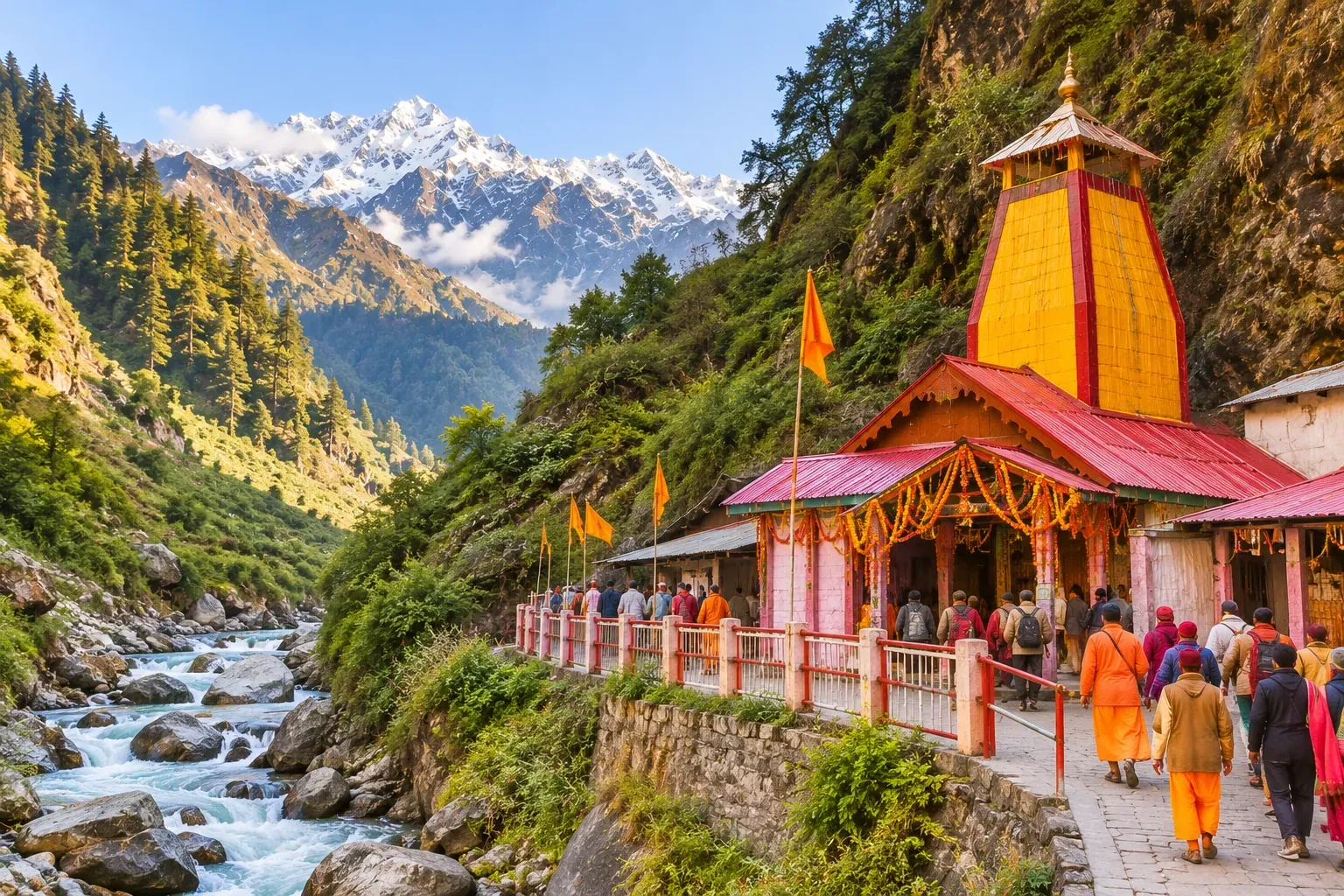
Haridwar to Haridwar
₹35,000
per person
Hyderabad – Dehradun, Dehradun – Indore and Indore – Hyderabad
Total Costing
₹3,56,500
Pancha Bhoota Sthalam and Tirupati Darshan
₹46,000